
Meaningful Impact Starts with Listening

Education & Learning Development
Education is at the core of CEDE’s work. We promote equitable access to quality, lifelong learning opportunities while supporting skills development, workforce readiness, and the integration of digital technology into education.
Education in Emergencies
CEDE supports the continuity of learning for children and young people affected by conflict, displacement, insecurity, climate-related disasters, and other emergencies.
Digital Transformation & Inclusion
CEDE leverages technology to expand access to education, skills, information, and economic opportunities.
Disability Inclusion & Accessible Development
CEDE promotes the inclusion of persons with disabilities in education, technology, employment, and community development.
Youth Development & Economic Empowerment
CEDE equips young people with the skills, knowledge, leadership capacity, and opportunities required to participate meaningfully in society and the economy.
Humanitarian & Charitable Response
CEDE provides humanitarian assistance and charitable support to vulnerable populations affected by emergencies, poverty, displacement, and social exclusion. Guided by the principles of humanity, neutrality, impartiality, and independence, our interventions focus on saving lives, restoring dignity, and strengthening resilience.
Provision of Medical Care
CEDE delivers support and short-term solutions to children, women, youth, and marginalized populations facing life-threatening crises.
Provision of Hygiene Kits
CEDE promotes safe spaces and hygiene in emergency relief by providing hygiene kits to enhance safety and well-being.
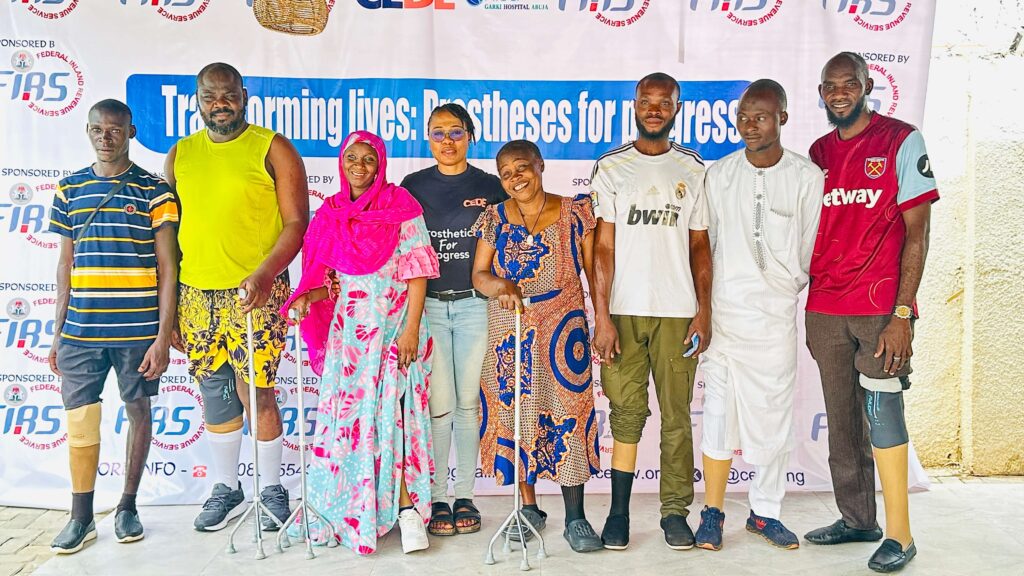
Transforming Lives: Prosthetics for Progress Initiative (2025)
- Hosted approximately 400 beneficiaries in Abuja
- Provided accommodation, feeding, and welfare support throughout the assessment period
- Conducted comprehensive medical screenings with Nisa Garki Hospital: stump evaluations, blood sugar and diabetes screening, full blood count and infection checks, kidney function tests, physiotherapy assessments, and mental health and psychosocial evaluations
- Supported corrective surgical interventions for beneficiaries whose conditions could be treated without prosthetic replacement
- Custom-designed and fitted prosthetic limbs for medically eligible beneficiaries
- Engaged orthopedic specialists, orthotists, and physiotherapists to provide rehabilitation support
- Provided mobility training and mobility training aids, including parallel bars and crutches
- Provided counselling, first aid, emergency medical support, accommodation, feeding, and selected transportation assistance
Project Outcomes
- 122 persons living with limb loss received custom-made prosthetic limbs
- Beneficiaries regained mobility, independence, and improved quality of life
- Individuals previously excluded from education and employment opportunities were empowered to return to school, work, and community life
- Corrective medical interventions enabled some beneficiaries to regain the use of their natural limbs without prosthetic support
- Increased access to rehabilitation and psychosocial support services for persons with disabilities
- Strengthened awareness on disability inclusion and the importance of accessible healthcare support
The Transforming Lives: Prosthetics for Progress Initiative restored more than physical mobility \u2014 it restored confidence, dignity, hope, and opportunities for vulnerable Nigerians living with disabilities.
Many beneficiaries affected by accidents, insecurity, infections, and medical conditions experienced life-changing outcomes as they regained the ability to walk independently and participate fully in society. Families and communities witnessed renewed hope, while the initiative reinforced the importance of inclusive development and leaving no one behind.
The project also demonstrated the power of strategic partnerships and corporate social responsibility in addressing critical humanitarian needs. Through the support of FIRS, CEDE was able to deliver life-changing interventions that contribute to disability inclusion, social protection, and sustainable development. As CEDE continues working toward its long-term target of reaching 3,000 beneficiaries and beyond, the initiative remains a powerful symbol of our commitment to restoring lives, promoting inclusion, and ensuring that every person can live with dignity and realise their full potential.
Policy Advocacy & Good Governance
CEDE promotes evidence-based policies and citizen engagement to strengthen governance, accountability, social inclusion, public health, environmental sustainability, and development outcomes.
Advocacy on the Dangerous Effects of Highly Hazardous Pesticides (2023)
Through the Alliance for Action on Pesticides in Nigeria (AAPN) and with support from the Heinrich Böll Foundation Abuja (HBS), CEDE implemented a public awareness and policy advocacy initiative addressing the health, environmental, and economic risks of Highly Hazardous Pesticides (HHPs) in Nigeria.
Key Activities
- Conducted a field study visit to an agroecological farm
- Organised a stakeholder engagement workshop on pesticide regulation, food safety, and sustainable alternatives
- Developed and disseminated digital awareness content on safer agricultural practices
Project Outcomes
- Increased awareness among stakeholders on the safe use and handling of pesticides
- Strengthened dialogue on pesticide regulation and policy reform in Nigeria
- Support for the development of policy frameworks aimed at improving pesticide monitoring and control
- Enhanced collaboration among stakeholders to promote research, innovation, and public sensitisation
- Increased advocacy for the phase-out of highly hazardous pesticides and the adoption of safer alternatives, including biopesticides
- Promotion of sustainable agricultural practices that protect public health, biodiversity, and the environment
- Greater recognition of the need to prioritise food safety, consumer protection, and Nigeria’s agricultural export competitiveness
Impact
The project reinforced CEDE’s commitment to evidence-based advocacy and demonstrated how multi-stakeholder collaboration can advance public health, environmental sustainability, and agricultural policy reform. It also laid the foundation for continued advocacy towards safer food systems and a more sustainable agricultural future in Nigeria.